

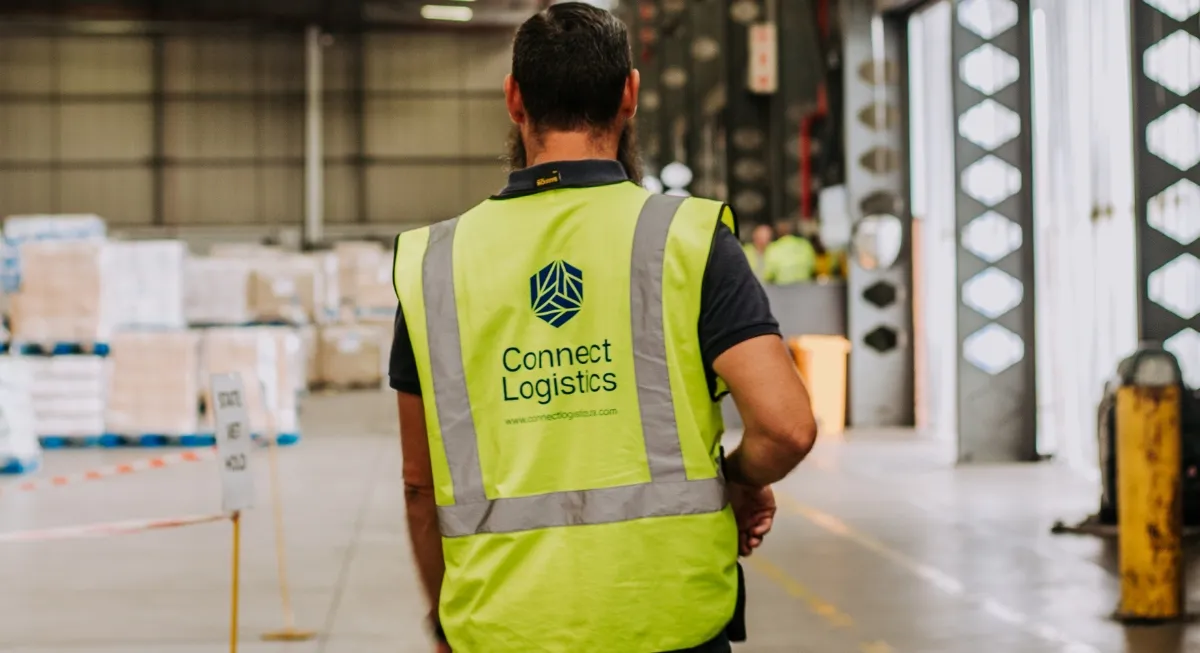
In today’s fast-moving business environment, logistics is about more than moving products from A to B. The right logistics partner should help your business improve efficiency, reduce complexity, increase visibility, and add value across every stage of the supply chain. From warehousing and transport to value-added services, pallet management, EDI integration, and waste management, a strategic partner helps connect the moving parts of your operation.
At Connect Logistics, we believe the best logistics solutions go beyond transport and storage. They are about understanding your business, identifying opportunities to improve efficiency and taking care of the details that keep your operation moving.
Transport is only one part of the supply chain. Once goods arrive at a facility, there are often several additional processes required before they reach the customer or the market.
This is where value-added logistics services can make a real difference. From product reworking and repackaging to preparing products for market, these services can reduce the need for businesses to manage multiple suppliers and processes independently.
By bringing more of these functions under one roof, businesses can simplify their operations, improve efficiency and have greater visibility across the supply chain.
What a Strategic Logistics Partner Should Provide
A basic transport provider moves goods from one point to another. A strategic logistics partner looks at the broader supply chain and helps identify ways to improve flow, reduce duplicated work, and simplify operations. This includes understanding how products are stored, handled, prepared, moved, tracked, and managed after they arrive. When these services work together, businesses gain better control and fewer operational gaps.
Effective warehousing isn’t simply about having somewhere to store stock. It is about making sure your goods are stored efficiently, securely and in a way that supports the needs of your business.
Connect Logistics provides contract logistics solutions tailored to the specific requirements of different industries. By understanding the unique demands of each operation, we can help businesses manage their storage requirements while keeping efficiency and cost-effectiveness front of mind.
Sometimes, it is the smaller operational details that have the biggest impact on efficiency.
Pallet management, for example, can become a time-consuming administrative task if it isn’t properly managed. Connect Logistics offers CHEP pallet management to help streamline this important part of the supply chain.
Technology also plays an increasingly important role. Seamless EDI integration can help businesses exchange information electronically, reduce manual processes and improve the flow of data between supply-chain partners.
Modern businesses are also under increasing pressure to manage waste responsibly. Logistics providers can play an important role here by supporting waste-management processes and helping businesses identify more efficient ways of handling materials and products.
It’s another example of how logistics can contribute to more than simply moving goods, it can support operational efficiency and responsible business practices too.
The right logistics partner should feel like an extension of your business. They should understand your industry, anticipate challenges and look for ways to make your supply chain work better.
Basic Transporter vs Strategic Logistics Partner
A logistics partner should do more than complete deliveries. They should help your business solve operational problems before they become delays, costs, or service issues. Use the table below to show how a full-service logistics partner can support the wider supply chain
| Area | Basic transporter | Strategic logistics partner |
| Main role | Moves goods from A to B | Supports transport, storage, handling, visibility, and supply chain efficiency |
| Focus | Delivery completion | Operational improvement and long-term performance |
| Warehousing | Usually limited or separate | Integrated storage and contract logistics support |
| Value-added services | Not usually included | Can support reworking, repackaging, preparation, and product handling |
| Data flow | Manual updates or limited reporting | EDI integration and better information flow |
| Pallet management | Client-managed | Can manage CHEP pallet processes and reduce admin pressure |
| Waste management | Outside scope | Can support responsible material and product handling processes |
| Business value | Solves a transport need | Reduces complexity and helps the supply chain work better |
At Connect Logistics, our approach is simple: we don’t just move your goods; we help move your business forward.
From warehousing and transport to value-added services, pallet management, EDI integration and waste management, we provide solutions designed to connect the different parts of your supply chain.
Because when every step works together, your entire operation works better.
FAQs
What should a logistics partner do?
A logistics partner should support more than transport. They should help with product movement, warehousing, visibility, value-added services, operational coordination, and supply chain efficiency.
What are value-added logistics services?
Value-added logistics services are extra operational services that support products before they reach the customer or market. These can include reworking, repackaging, product preparation, labelling support, pallet management, EDI integration, and waste management.
Why should a logistics partner offer warehousing?
Warehousing helps connect transport, storage, handling, and distribution. When warehousing is integrated with broader logistics services, businesses can improve efficiency, reduce complexity, and respond better to changing operational needs.
What is EDI in logistics?
EDI, or electronic data interchange, helps supply chain partners exchange information electronically. In logistics, it can reduce manual admin, improve data flow, and support faster communication between systems and partners.
How do I choose a logistics partner?
Choose a logistics partner that understands your industry, offers more than basic transport, provides visibility, supports storage and value-added services, and can help reduce operational complexity.
Why is pallet management important in logistics?
Pallet management can become time-consuming if it is not controlled properly. A logistics partner that supports CHEP pallet management can help reduce admin pressure and improve supply chain coordination.